By the end of the 16-bit era, Nintendo reported 49.10 million Super Nintendo units sold worldwide against Sega's roughly 30.75 million Genesis and Mega Drive consoles — an 18-million-console gap decided by chip choices made years before either box shipped. The marketing said 'Blast Processing' versus 'Play It Loud.' The engineering said two completely different theories of what a game console should be.
Understanding those theories explains why Sonic feels faster than Super Mario World, why Star Fox needed an extra chip in the cartridge, and why the two consoles' soundtracks are unmistakable at first listen.
How different were the two CPUs, really?
The Sega Genesis is built around a Motorola 68000 running at about 7.6 MHz in NTSC consoles — the same processor family that powered the original Macintosh and countless arcade boards. It is paired with a Zilog Z80 at 3.58 MHz that handles sound and, in early models, Sega Master System compatibility. The 68000 gave Sega a head start: ports from arcade hits were comparatively straightforward, and the chip's raw speed supported the campaign message that Genesis 'does what Nintendon't' faster.
The Super NES runs a Ricoh 5A22, a licensed variant of the Western Design Center 65C816, at roughly 3.58 MHz in NTSC hardware — about half the clock, with an 8-bit data bus inherited from the 6502 lineage. On paper that is a rout. In practice the SNES's custom co-processors, its richer graphics hardware and its expandable cartridge design closed the gap in ways raw megahertz never captured. Console speed comparisons that stop at clock rate miss almost everything that mattered here.
Why did SNES graphics look softer but richer?
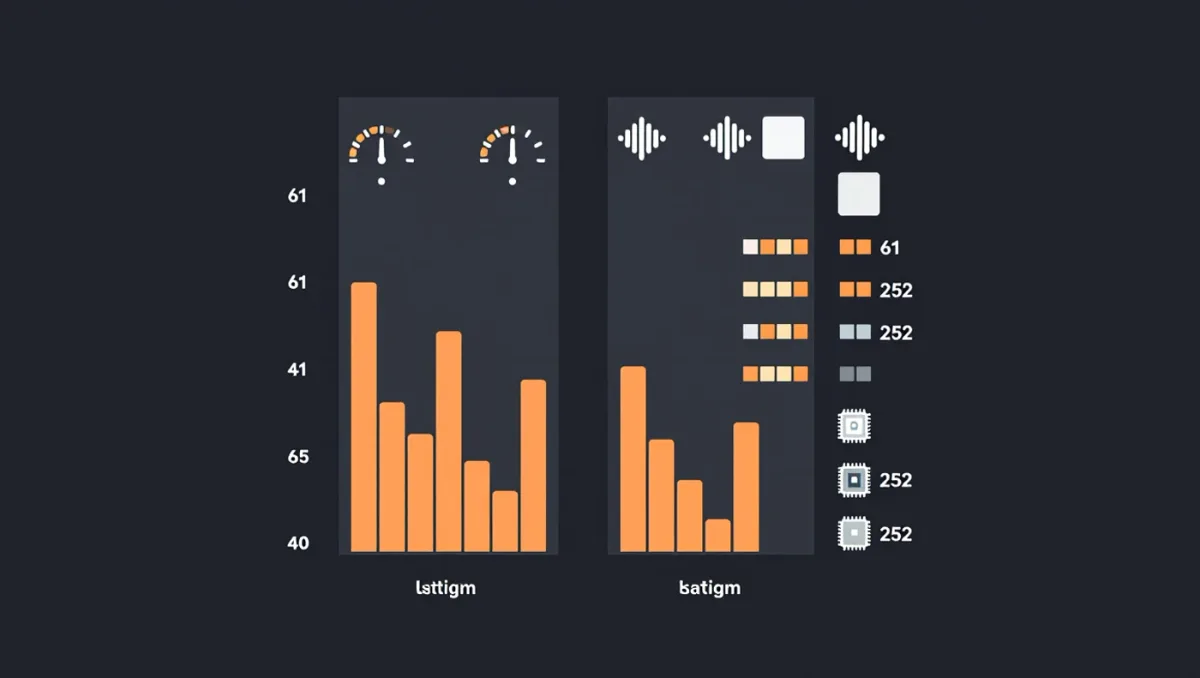
The Genesis displays up to 61 colors on screen from a 512-color palette across two sprite and background planes. That constraint defined its look: high-contrast, hard-edged art tuned for pop on a 1990 living-room TV, with dithering used aggressively as a poor man's shading. Streets of Rage and Sonic are masterclasses in making 61 colors feel like more.
The SNES draws from a 32,768-color palette with up to 256 colors on screen, and layers up to four background planes. Its signature trick, Mode 7, treats one background layer as a rotating, scaling texture matrix — the engine behind F-Zero's tracks, Super Mario World 2: Yoshi's Island's boss rotations and the intro of Final Fantasy VI. Sega's equivalent scaling lived mostly in arcade boards the Genesis could not match without cartridge help.
Both consoles leaned on cartridge chips when hardware fell short. The best-known is the Super FX coprocessor, co-developed with Argonaut Software, which rendered polygonal 3D in Star Fox (1993) and pushed SNES cartridges to new price highs. Sega answered with the SVP chip in Virtua Racing, a Genesis cartridge that cost about $100 at launch and sold poorly — the same strategy, at retail prices the market rejected.
Why do the two consoles sound so different?
Close your eyes and you can identify the console in seconds. The Genesis pairs a Yamaha YM2612 FM synthesis chip with the SN76489 PSG, producing the metallic, brassy timbres of Sonic's Green Hill Zone and the pyrotechnics of composer Yuzo Koshiro's Streets of Rage 2 soundtrack, which famously used custom preprocess tooling to squeeze more out of the FM hardware.
The SNES takes the opposite approach: a Sony-designed SPC700 sound core with eight channels of sampled ADPCM audio. Instead of synthesizing tones, it plays recorded samples — orchestral hits, choirs, rich pianos — which is why SNES RPG scores sound lush where Genesis scores sound electric. The trade-off was sample memory inside each cartridge and a harder job for composers, who mixed samples within tight space budgets.
Did the add-ons doom Sega's lead?
Sega won North America's early 1990s on timing and attitude, holding a majority share at points around 1992-1993. Then came the expansion strategy: the Sega CD in 1992 and the 32X in late 1994, each a partial upgrade requiring its own purchase. Combined, the two add-ons confused the install base and fragmented developer support at the exact moment the next generation — Sony's PlayStation and the Sega Saturn — arrived in 1995. Nintendo's single clean upgrade path looked conservative by comparison and aged far better commercially.
Which console should a retro buyer pick today?
The honest answer is both were optimized for different libraries, so buy for the games, not the silicon:
- Genesis strengths: sports licensed titles, arcade-style action, the Sonic series, shmups with FM-synth soundtracks, and cheaper cartridges on average.
- SNES strengths: Nintendo's own catalog — Super Metroid, the Zelda entries, Donkey Kong Country — plus the deepest JRPG and action-adventure lineup of the generation, at consistently higher cartridge prices.
Both consoles output RGB natively and shine on period-correct displays, and both have healthy flash-cart and reproduction ecosystems if you prefer soft-modern convenience over original media.
Budget for the rest of the chain, though: original controllers drift with age, capacitors in both machines are now well past their design life, and a recapped console or a quality replacement power supply is a routine line item, typically $30 to $80, that first-time buyers forget to plan for. Working hardware is the quiet cost center of 16-bit collecting, and it prices into any honest comparison.
Verdict: the Genesis is the better pick for arcade-speed action fans on a budget; the SNES is the better pick for anyone whose priority is Nintendo's first-party catalog and the era's landmark RPGs. The 18-million-console verdict says the market agreed with the latter — but silicon history says both machines were masterpieces of deliberate constraint.