Console wars are argued with feelings. Sales numbers argue better. Wikipedia keeps a running list of best-selling game consoles (Wikipedia). Its top ranks settle decades of debate at a stroke.
First, the ground rules. The list counts consoles that have sold at least 1 million units worldwide (Wikipedia). Each entry includes sales from every version of the machine unless noted. Those caveats matter. Bundles and redesigns quietly pad totals on every platform.
The Top Three: Sony, Nintendo, Nintendo
The crown belongs to Sony. According to Wikipedia, the PlayStation 2 is the best-selling console of all time (Wikipedia). It sold 160 million units worldwide, per the same list (Wikipedia). That record has held for more than two decades.
Right behind it sit two Nintendo handhelds. Per the list, the Switch is the second best-selling console of all time (Wikipedia). At 156.59 million units, it is also the best-selling one currently on the market (Wikipedia). The Nintendo DS holds third place at 154.02 million (Wikipedia). The pattern is striking. Two of the top three machines are handhelds, and both are Nintendo's.
The Rest of the Top Ten
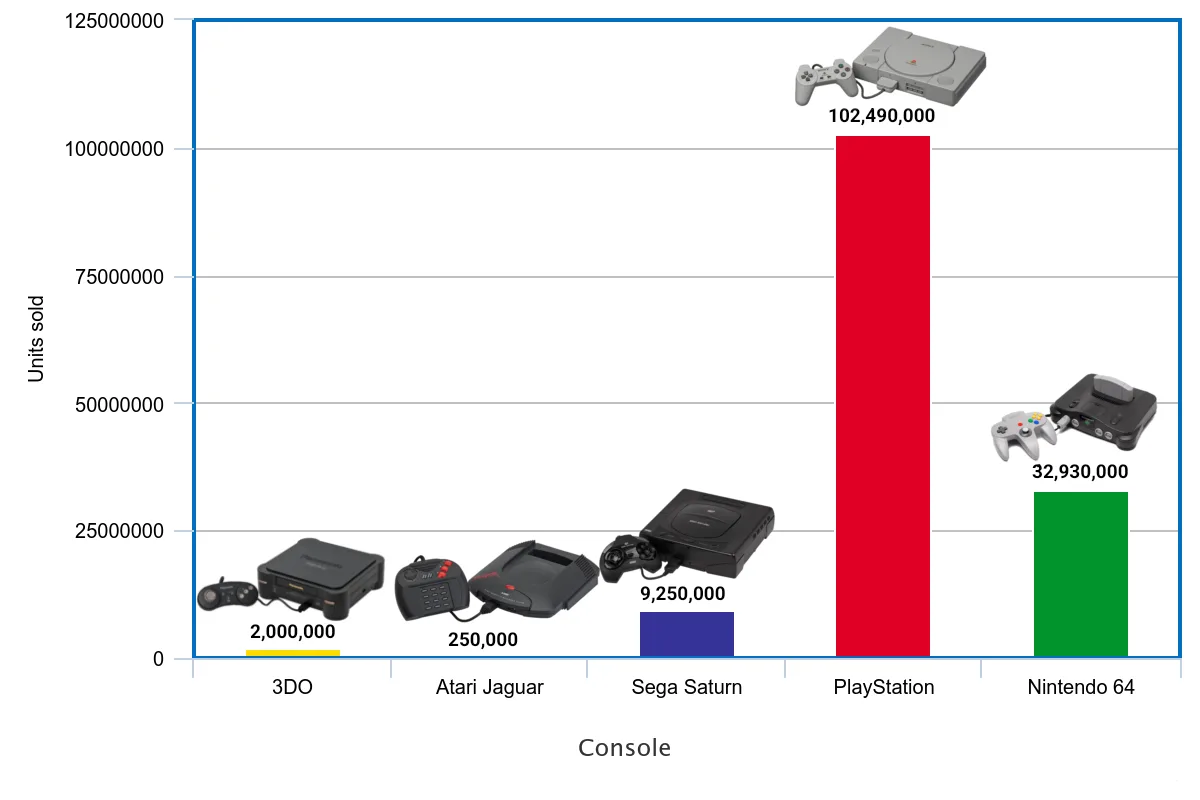
The rest of the chart stays busy. Per the list, the Game Boy and Game Boy Color line sits next at 118.69 million units (Wikipedia). The PlayStation 4 follows at 117.2 million (Wikipedia). Then come the original PlayStation at 102.49 million (Wikipedia). The Wii lands at 101.63 million (Wikipedia).
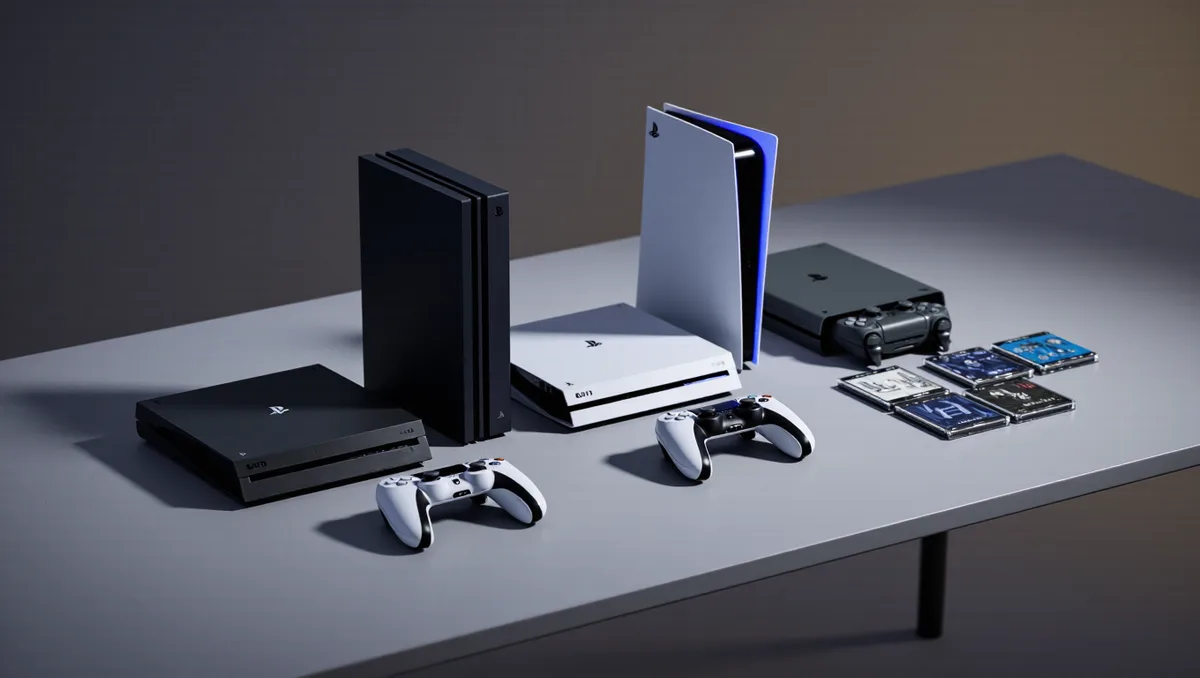
The PlayStation 5 sits at 95.3 million (Wikipedia). The PlayStation 3, at 87.4 million, rounds out the Sony run (Wikipedia). The Xbox 360, at 84 million, is Microsoft's best result (Wikipedia). Count the badges. Sony holds five spots in the top ten. Nintendo holds four. Microsoft holds one. The list also rewards old age. The NES, launched in 1983, still ranks with 61.91 million units sold (Wikipedia).
Handhelds Punch Above Their Weight
Scan further down and the handheld story grows. Per the list, the Game Boy Advance sold 81.51 million units (Wikipedia). The PSP reached 80 million (Wikipedia). The Nintendo 3DS hit 75.94 million (Wikipedia). Each of those would beat most home consoles of its era. The PSP also proved a handheld could thrive outside Nintendo's shadow. It just never caught the DS.
Why the Winners Won
The market structure explains part of it. According to Wikipedia, competition in the console market since the 2010s is an oligopoly (Wikipedia). The three main manufacturers are Nintendo, Sony, and Microsoft. Each leans on exclusive first-party games to drive buyers. Wikipedia also notes that most generations have had two or three dominant players (Wikipedia). It adds that Sega left the hardware business after the Dreamcast.
Price and identity did the rest. Per Wikipedia, launch prices were about US$200 to 300 in the 1970s and 1980s (Wikipedia). They have since risen to roughly US$400 to 500 (Wikipedia). The NES also pioneered the console mascot. It used Mario as the playful face of the system, and Sega answered with Sonic (Wikipedia). Bundles built around mascots and key titles still drive sales at launch and near Christmas.
When Price Sank a Generation
Price can also sink a machine. Per Wikipedia, the first optical-media consoles of the early 1990s carried price points above US$400, some as high as US$700 (Wikipedia). The result was poor sales for those machines. Topping the all-time chart is not the same as winning your generation. A high launch price can lose a generation before the games even ship.
Conclusion: The Numbers Keep Moving
This chart is a snapshot, not a monument. The Switch is still on sale, per the list, so its total can keep climbing (Wikipedia). The Switch 2, released in 2025, already sits at 23.68 million units (Wikipedia). The PlayStation 5 keeps selling too, per the same page (Wikipedia). The PlayStation 2's record has survived every challenger so far (Wikipedia). But records exist to be broken, and the next generation may finally do it. This connects to our earlier piece, Xbox Series X and Game Pass in 2026: The Subscription Math, Recalculated.