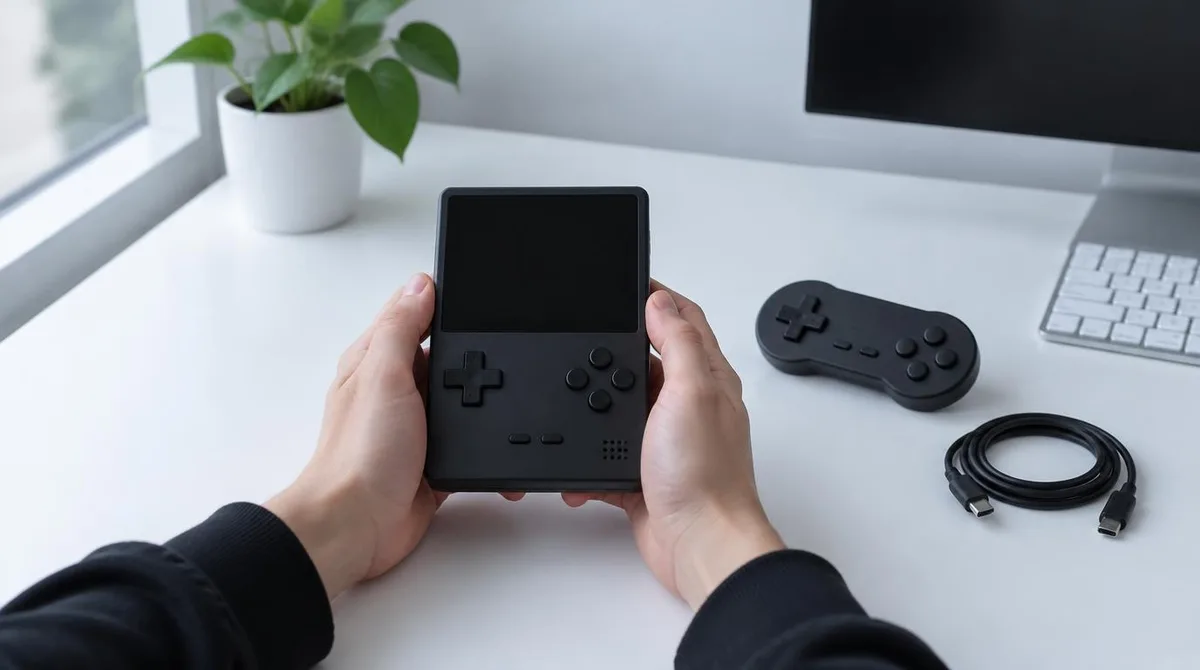
What is the R36S, and why is a £36 handheld showing up in every Black Friday round-up? It is a budget retro gaming handheld that plays classic games through emulators — software that imitates old consoles — and, per T3, it comfortably handles everything up to original PlayStation titles. Amazon currently sells it bundled with more than 20,000 games for just over £35, according to T3's deal write-up published on 26 November 2026.
The short version for a newcomer: the R36S is not a new console with new games. It is a small screen, a processor and buttons wrapped around emulation software, aimed at people who want NES, SNES, Master System, Mega Drive and PlayStation-era games in one pocketable device. T3 calls it one of the best value-for-money options in a collection the writer describes as sizable, and notes owning a couple already.
That value framing is why the device keeps resurfacing each sales period. T3 reports it appears reliably in the Black Friday sales, and that stock moves fast whenever the price dips near the £30 mark — the writer's advice is to order quickly, because the price is unlikely to drop much lower without added shipping fees.
What exactly is a retro emulation handheld?
A retro emulation handheld is a portable device that runs emulator programs instead of a native game library. Each emulator imitates one older console, so the same machine can behave like a NES one moment and a Mega Drive the next. T3 describes the R36S as coming "packed with emulators for all the classic systems," which is what makes the large game count possible. We covered a connected angle in Retro Game Prices in 2026: What the Market Data Actually Shows.
The category has grown because old consoles are getting harder to hook up to modern TVs, and original cartridges and discs keep climbing in price. Our retro coverage follows that wider picture, from preservation gaps to market trends, and devices like the R36S sit at the cheap, convenient end of the response. Readers following this should also see Cartridges Outlast Discs: What 40 Years of Game Media Actually Survived.
What hardware is inside the R36S?
The R36S pairs a 3.5-inch 640 x 480 display with a Rockchip RK3326 processor. The screen's 4:3 aspect ratio matters: it matches the shape of 8-bit and 16-bit era games, so they fill the display without awkward stretching. T3 calls the display "decent" and describes the user interface as workable for finding and starting each game.
The RK3326, per T3, "has been the bedrock of retro gaming devices for a few years." That longevity is a feature rather than a flaw — a mature, well-understood chip means emulator support is settled and performance is predictable. The trade-off is ceiling: T3 notes the device is "not the most powerful or famous retro gaming handheld out there," and suggests you "might even be able to eke a bit of PSP or N64 gaming out of it." That phrasing signals those systems sit at the edge of what the chip can manage, not comfortably inside it.
What can it comfortably play?
Per T3's rundown, the comfortable zone covers:
- 8-bit systems such as NES and Master System
- 16-bit systems such as SNES and Mega Drive
- Original PlayStation titles
- Partial, best-effort territory: PSP and N64
If your interest stops at the 16-bit era plus PS1, the hardware matches the job. If Dreamcast or GameCube is on your list, this is the wrong device — though the source does not claim it runs those at all, and we will not pretend otherwise.
What does the 20,000-game claim actually mean?
The game count comes from a bundled memory card, not from the device itself. T3 states that "most suppliers include a card filled with dubiously sourced ROMs (the games) and so it comes largely plug-and-play." ROM is the standard term for a copy of a game's cartridge or disc data, loaded onto the emulator to play.
That "dubiously sourced" wording is doing real work, and it is worth reading slowly. A game file is only straightforwardly legitimate when you have a right to it — and the mass-bundled cards that ship with these handhelds are, by T3's own description, not a clean source. The plug-and-play convenience and the question of where those files came from arrive in the same box. Our explainer on RetroArch and how emulator cores work covers the software side without the bundled-card question baked in.
Practical reading of the deal, then: the £36 buys the hardware and the convenience. The 20,000-game figure describes what the seller has loaded, and T3's framing treats the sourcing as questionable rather than settled.
Is the R36S worth it at this price?
On T3's evidence, the case rests on three points: a low price that recurs every major sales period, hardware adequate for everything up to PS1, and a display and interface the writer finds decent and workable. The writer owns multiple units, which is its own signal about how the device lands with enthusiasts.
The counterweights are equally clear from the same source: limited headroom beyond the PS1 era, a game bundle with murky origins, and a stock pattern that rewards fast decisions — T3 says units around the £30 mark get "snapped up sharpish." For context on how handheld gaming reached this point, our piece on Nintendo's handheld history traces the line from the DMG onwards.
One more shopping note from T3: the writer's price floor assumes no additional shipping fees, so the checkout total is the figure to watch, not the listing price.
What should a first-time buyer do next?
If the pitch appeals, the sequence is simple. Confirm the current Amazon price matches the "just over £35" figure T3 reported, order quickly given the sell-out pattern, and treat the bundled card as a starting point you may want to replace rather than a library you endorse. The device's own reputation, per T3, rests on the hardware — and that hardware is the part you keep.
The broader context is worth a look too: the emulation handheld market keeps evolving on top of chips like the RK3326, and our hardware section tracks what each new board changes. For now, the R36S remains the reference point for what £36 buys.